Precast Firewall Panel Design
We design precast concrete firewall panels — the tall, slender free-standing panels used to provide fire separation between buildings, plant areas and storage yards. Because these panels carry little gravity load, their design is governed by out-of-plane lateral loading and overall stability — the lateral demand taken as the greater of the wind pressure and the lateral blast (overpressure) load — so we verify the panel, its handling condition and its base connection to keep it structurally adequate in service and safe to erect.
The design checks we perform
- Lateral load derivation
-
We establish the out-of-plane lateral demand on the free-standing panel, taken as the greater of the design wind pressure and the lateral blast (overpressure) load specified for the facility, including the relevant force coefficients and height factors. Where a blast requirement applies it normally exceeds wind and governs the design.
- Out-of-plane flexure
-
We design the panel reinforcement for out-of-plane bending under the governing lateral load, and confirm minimum steel and cover for the exposure.
- Shear
-
We check out-of-plane shear across the panel and at the base fixing.
- Deflection
-
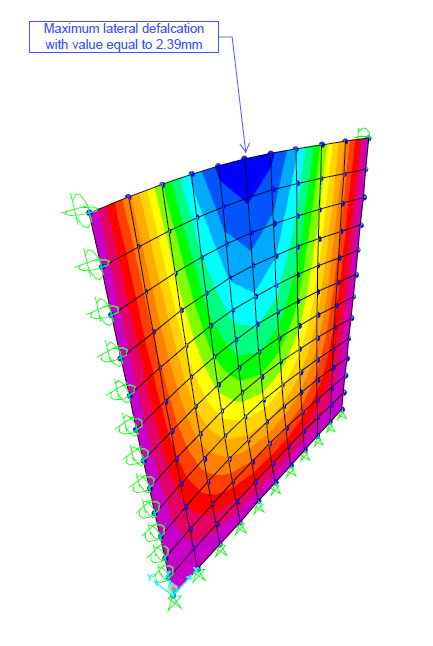
We verify serviceability deflection under the out-of-plane lateral load, which often governs for a tall, slender panel.
- Crack-width control
-
We check service-load crack width against the durability limit and adjust bar size and spacing to comply.
- Stability and base connection
-
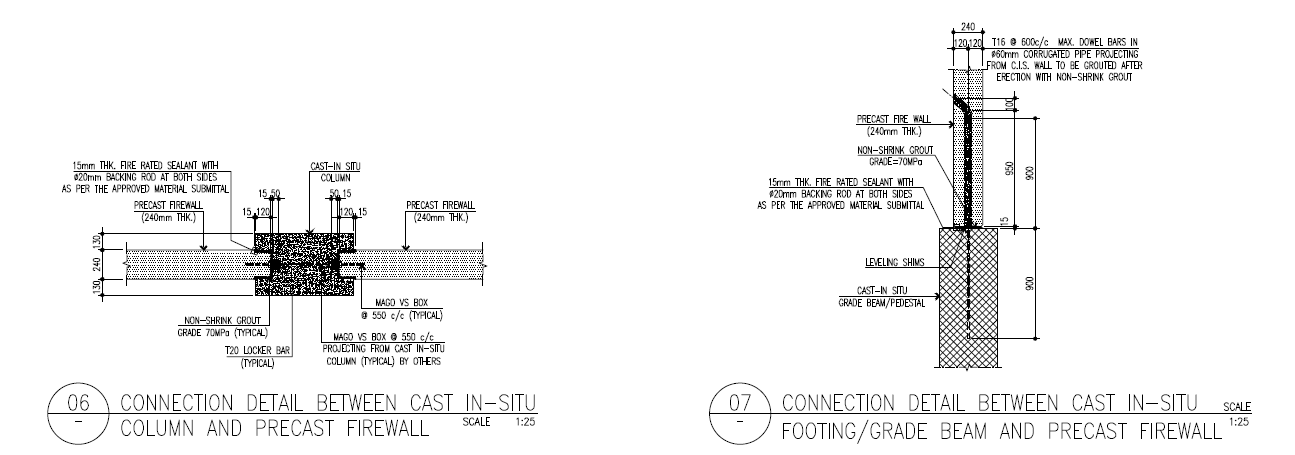
We verify the stability of the free-standing panel and design the base fixing — dowels or a pocket connection — that holds it upright and carries the out-of-plane moment into the foundation.
- Lifting and handling
-
We check lifting inserts and panel stresses during demoulding, handling and erection, where slender panels are most vulnerable.
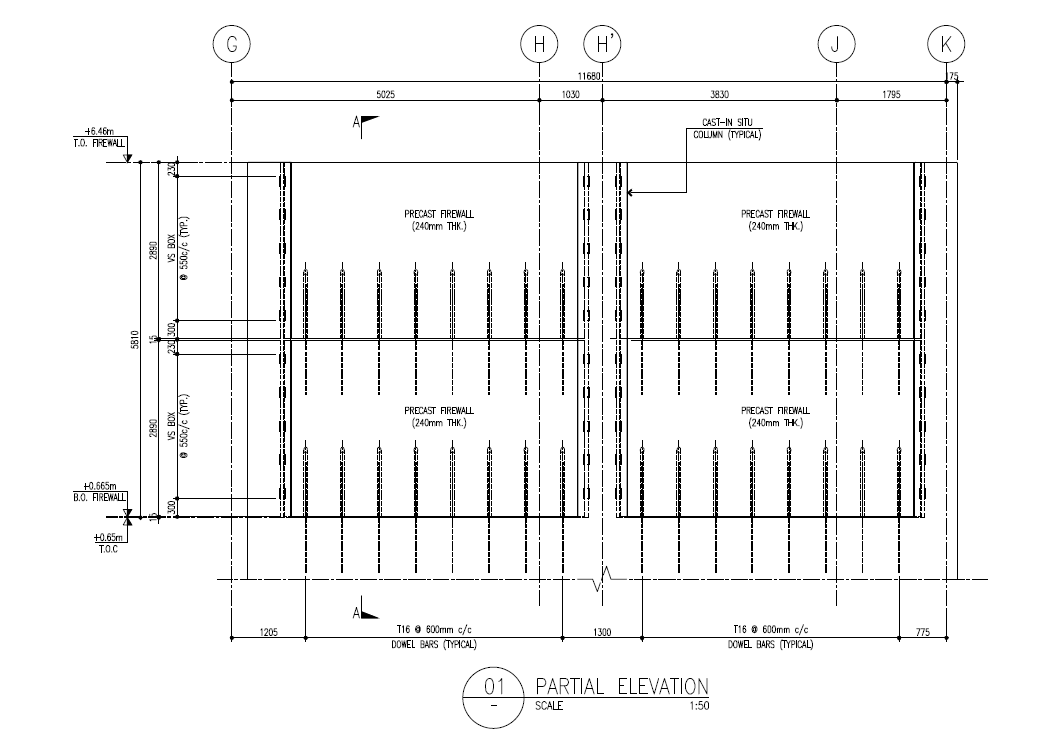
Partial Elevation
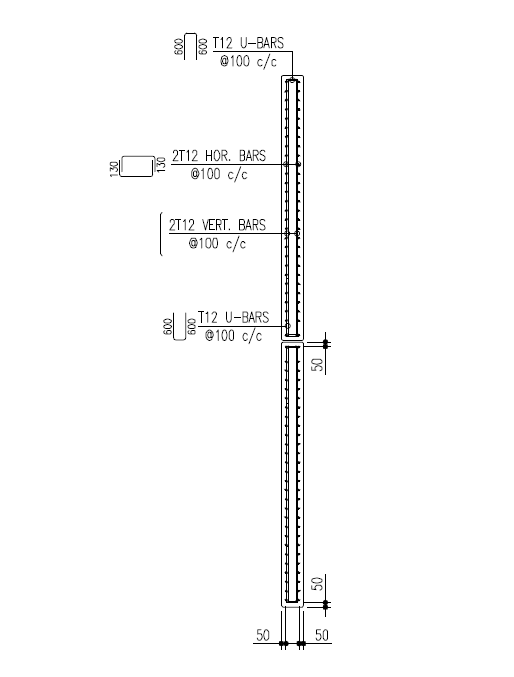
Reinforcement Detail
Connection Details
Governing standards and how we apply them
- BS 8110
-
Our primary reinforced-concrete code for the panel — flexure, shear, deflection and serviceability crack-width control.
- Wind and blast loading
-
The out-of-plane lateral demand is taken as the greater of the design wind pressure (from the applicable wind code for free-standing walls and parapets) and the lateral blast (overpressure) load specified for the facility, matching the project specification.
- QCS
-
We align materials, durability and cover with the project general specification for local approval.
Why choose Precasterz for firewall panel design
- Slenderness handled properly
-
We treat the out-of-plane lateral load and stability as the governing actions and check the handling and erection stages where tall panels are most at risk.
- Connection-aware design
-
We design the base fixing together with the panel, so the out-of-plane moment is carried correctly into the foundation.
- Code-correct serviceability
-
Deflection and crack width are verified, not assumed — essential for a slender exposed panel.