Precast Footing & Foundation Design
We design precast and cast-in-place footings and foundations for precast structures, from isolated pad footings to pocket (socket) foundations that receive precast columns and panels. We verify the foundation for soil bearing and stability and for the full set of reinforced-concrete strength and serviceability checks, working from your geotechnical report and column / panel reactions.
The design checks we perform
- Soil bearing pressure
-
We check the bearing pressure under all load combinations against the allowable / design bearing capacity from the geotechnical report, including eccentric and biaxial cases.
- Stability
-
We verify sliding and overturning stability where lateral load or moment is transferred to the foundation.
- Flexural design
-
We size the footing reinforcement for the design moments at the critical sections in each direction.
- One-way (beam) shear
-
We confirm one-way shear capacity at the critical section away from the column face.
- Two-way (punching) shear
-
We check punching shear around the column or pocket and provide shear reinforcement where required.
- Crack-width control
-
We verify service-load crack width for durability, particularly for buried foundations.
- Development and anchorage length
-
We detail bar development and anchorage to ACI 318-19 so the footing reinforcement is fully anchored.
- Pocket / socket connection
-
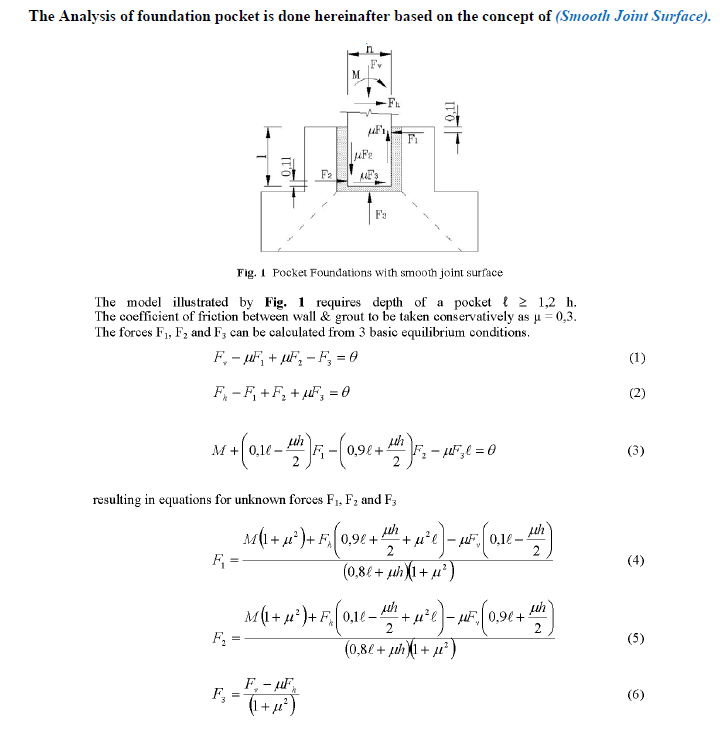
For pocket foundations we resolve the connection forces from the applied moment, shear and axial load through wall friction and bearing, size the pocket depth and reinforcement, and verify grout and embedment.
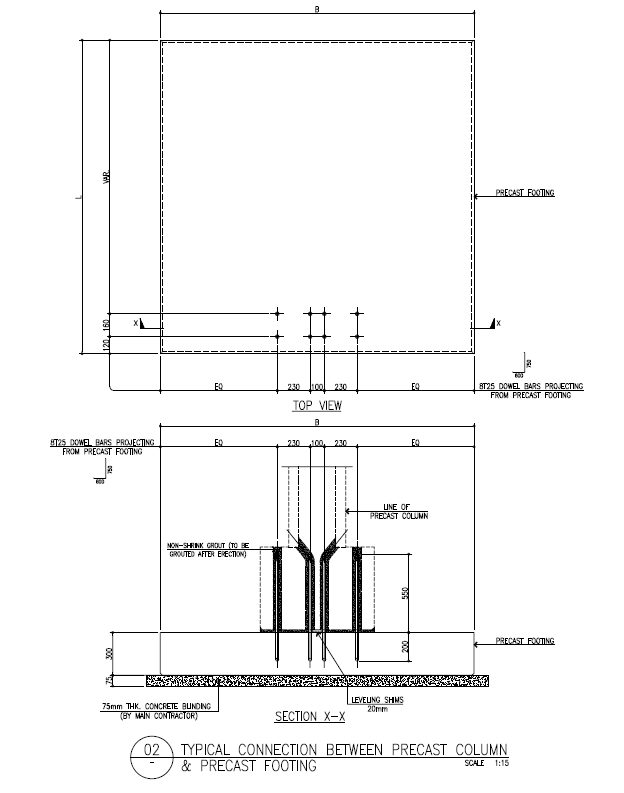
Typical Column-to-Footing Connection
Governing standards and how we apply them
- ACI 318-19
-
Primary code for footing flexure, one-way and punching shear, crack width and reinforcement development. We apply the punching-shear provisions around columns and pockets consistently with the connection design.
- QCS
-
We align durability, cover and materials with the project general specification.
Why choose Precasterz for footing and foundation design
- Connection and footing as one
-
We design the pocket or dowel connection and the footing together, so the forces delivered by the precast element are carried correctly into the ground.
- Punching given proper attention
-
Two-way shear governs many precast footings and pocket bases; we check it rigorously rather than relying on flexure alone.
- Geotechnically grounded
-
We design to the actual bearing capacity and parameters in your soil report, not generic assumptions.