
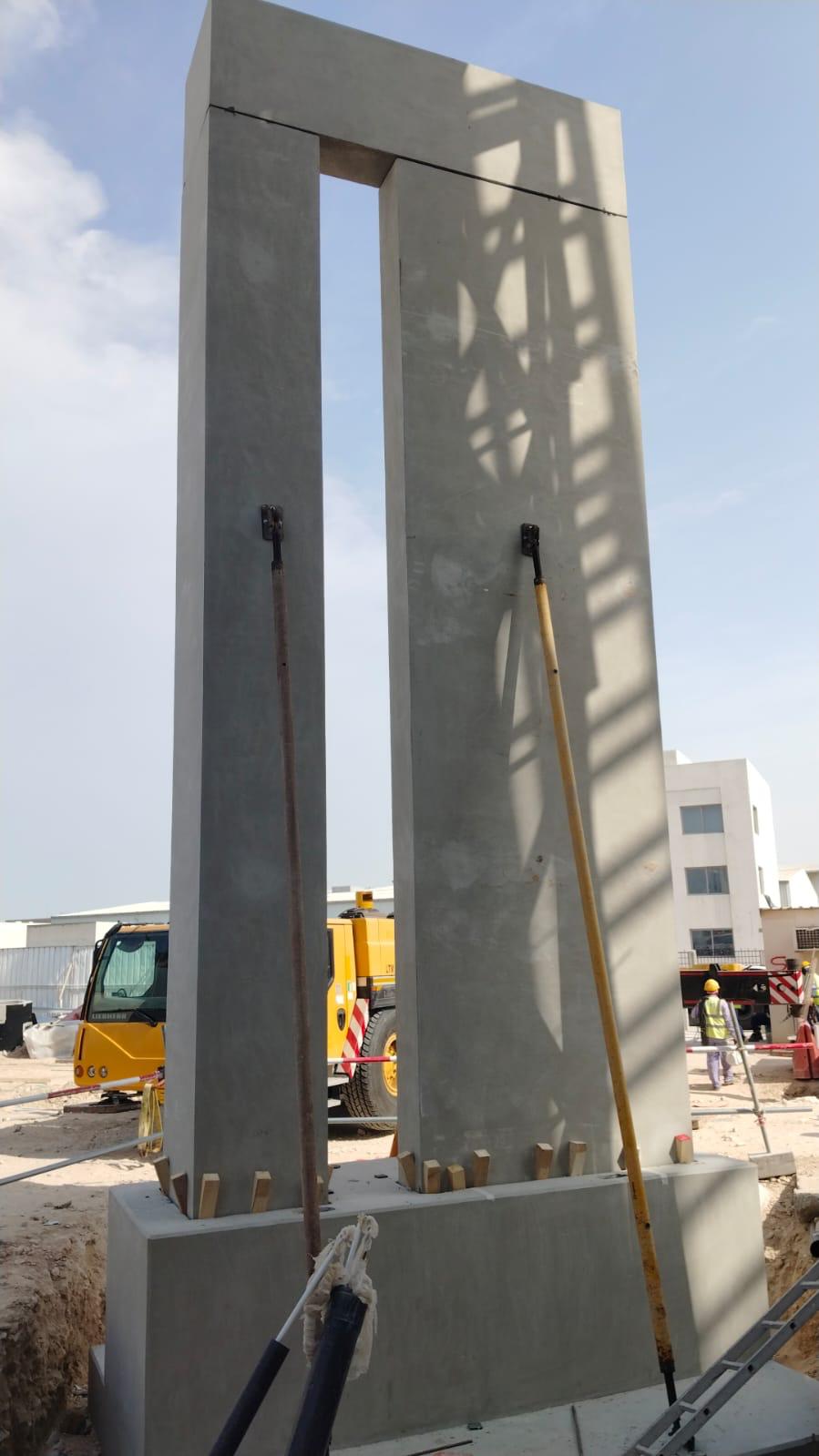
The design checks we perform
Wind load
We establish the design wind force on the sign face and structure, including force coefficients and height factors, and the overturning moment and shear delivered to the foundation.
Upper beam / sign frame
We design the upper beam and frame that carry the sign for flexure, shear and crack width.
Column / strip design
We design the supporting column or strip for combined axial load, shear and bending, and detail the vertical and shear reinforcement.
Footing flexure and shear
We design the footing for flexure and one-way shear under the column reactions and overturning.
Punching shear
We check two-way (punching) shear around the column or pedestal on the footing.
Crack-width control
We verify service-load crack width on the footing and beam for durability.
Pocket / base connection
We resolve the connection forces and design the pocket or base fixing that transfers the moment and shear into the foundation.
3D Structural Model
General Arrangement and Connections
Upper Beam Detail
Governing standards and how we apply them
ACI 318-19
Primary code for flexure, one-way and punching shear, crack width and reinforcement detailing of the beam, column and footing.
Wind loading
Wind force on the sign and structure is derived from the applicable wind code, matching the project specification.
QCS
We align materials, durability and cover with the project general specification.
Why choose Precasterz for pylon and signage design
One load path
We carry the wind action from the sign face through the beam and column into the footing and the soil, with no gap between element and foundation design.
Punching and overturning checked
Two-way shear and overturning stability govern many sign foundations; we check them rigorously.
Connection-aware
The pocket or base fixing is designed with the structure so the moment transfer is reliable.