Precast Retaining Wall Design
We design precast and reinforced-concrete retaining walls for earth-retention and level-difference applications. A retaining wall must first be stable as a rigid body against the retained soil and surcharge, and then be adequate as a reinforced-concrete element, so we verify both the geotechnical stability and the structural strength and serviceability of the stem and base.
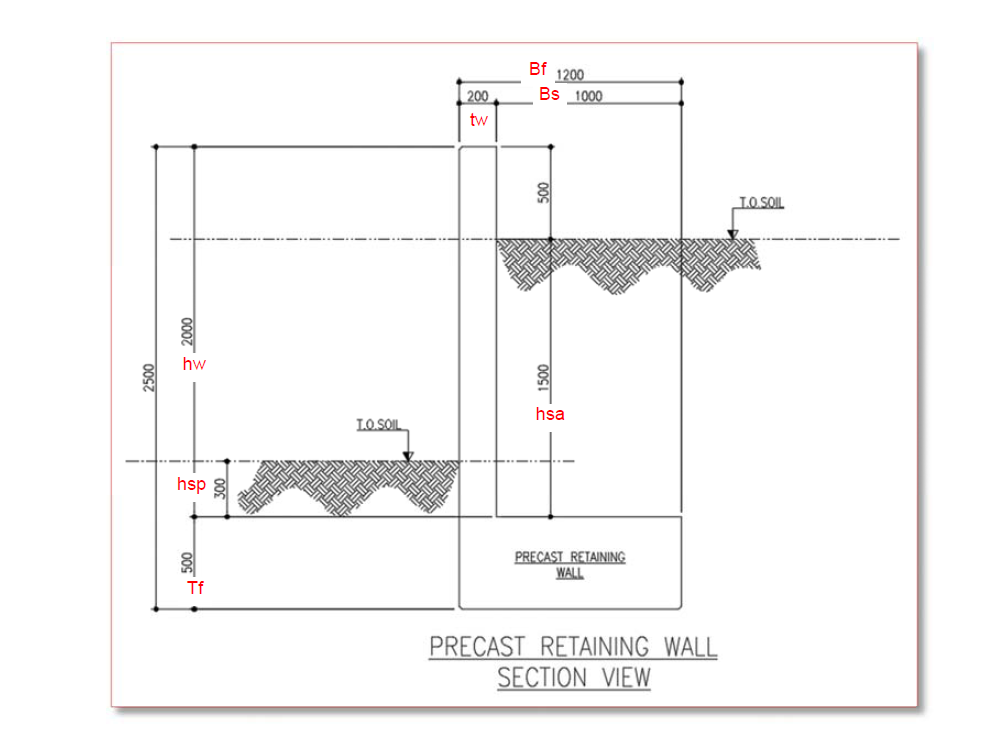
The design checks we perform
- Earth pressure and surcharge
-
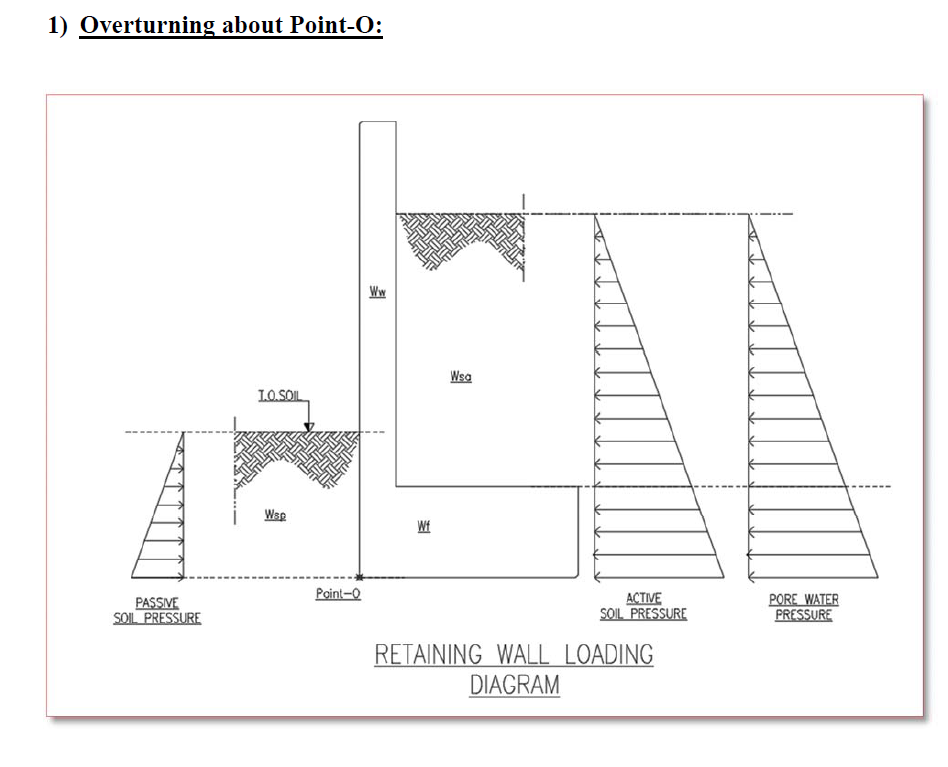
We establish active / at-rest earth pressure and any surcharge, water and live loading from the retained profile and the geotechnical report.
- Sliding stability
-
We check resistance to sliding at the base, including base friction and any passive resistance, against the driving earth thrust.
- Overturning stability
-
We verify the restoring moment against the overturning moment about the toe with the required factor of safety.
- Bearing pressure
-
We confirm the base bearing pressure, including the effect of eccentricity, against the allowable bearing capacity.
- Stem design
-
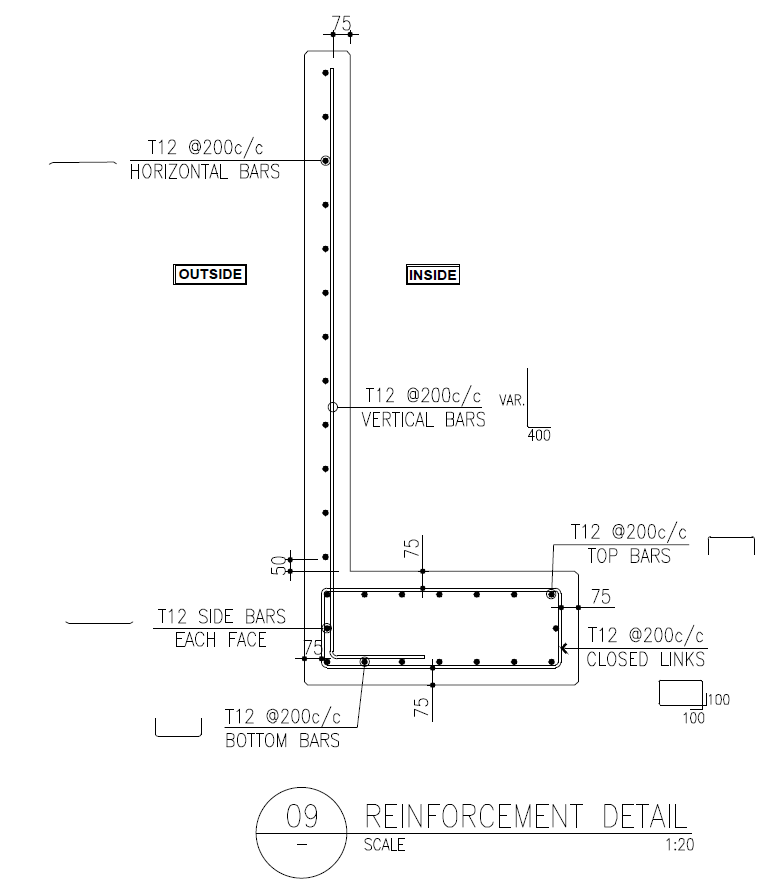
We design the stem for flexure and shear under the earth-pressure distribution and detail the vertical reinforcement and curtailment.
- Base (toe and heel) design
-
We design the toe and heel for flexure and shear under bearing pressure and retained-soil weight.
- Crack-width control
-
We verify service-load crack width for durability on the retained and exposed faces.
- Lifting and handling
-
For precast units we check lifting inserts and stresses during handling and erection.
Loading and Stability
Reinforcement Detail
Governing standards and how we apply them
- ACI 318-19
-
Primary code for the reinforced-concrete design of the stem and base — flexure, shear, crack width and detailing.
- QCS and the geotechnical report
-
Stability factors, bearing capacity and soil parameters are taken from the project specification and soil investigation so the design reflects the real ground conditions.
Why choose Precasterz for retaining wall design
- Stability and structure both verified
-
We confirm sliding, overturning and bearing first, then design the concrete — a wall that is structurally strong but unstable, or stable but under-reinforced, is not acceptable.
- Driven by the soil report
-
We use the actual earth-pressure coefficients and bearing capacity from your geotechnical data.
- Precast-ready detailing
-
Where the wall is precast we detail it for casting, lifting and connection to the base so it installs cleanly.